My Account
-
Buyer
Register as a Foriegn Buyer
-
Seller
Log In Register as a Seller
My Account
Buyer
Seller
Min Order Qty 1
Product not available
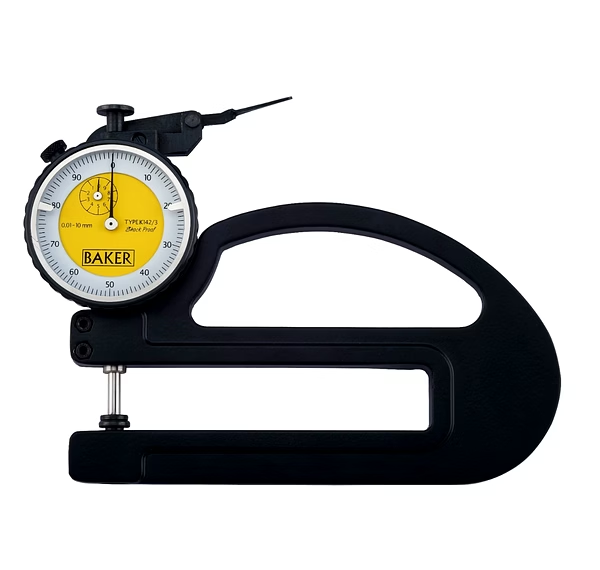
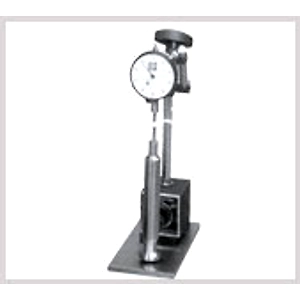
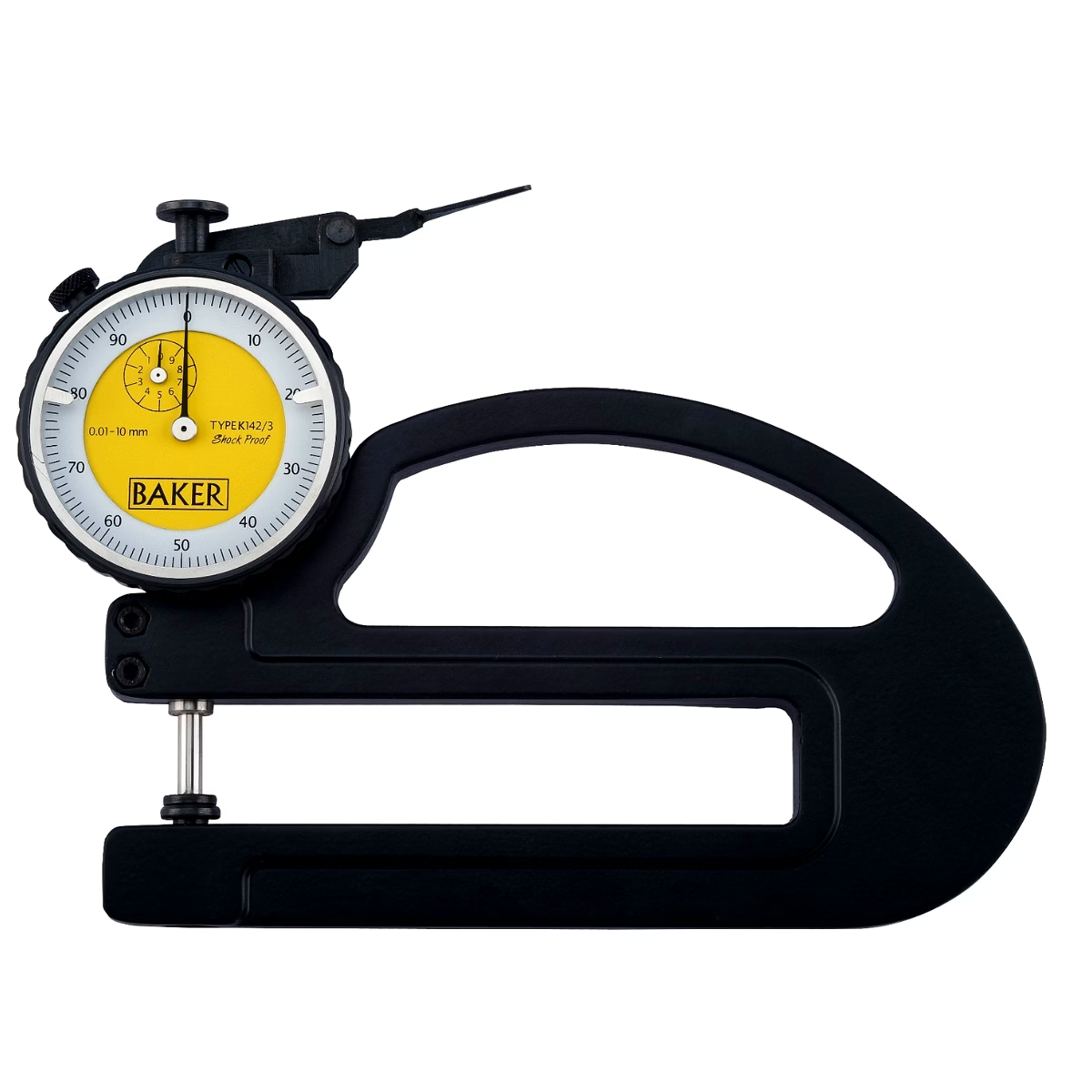
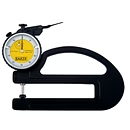
The Dial Thickness Gauge is a mechanical measurement instrument for fast, repeatable thickness checks across sheet, film, gasket and thin-strip materials. It is used by QC teams, production engineers and incoming‑inspection personnel to verify nominal thickness and detect out-of-tolerance parts during process control.
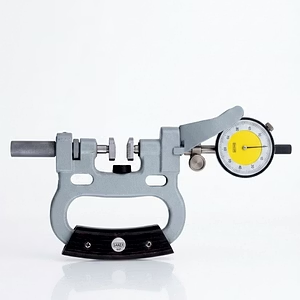
Simple mechanical dial readout delivers clear incremental resolution useful for routine inspection. Units are compatible with standard gauge blocks and bench calibration rigs. Routine recalibration schedules and dimensional validation using a CMM lab ensure traceable measurements.
Contact us for
The Dial Thickness Gauge provides a mechanical dial indicator coupled to a precision spindle and anvil for direct thickness measurement. Typical resolution is indicated on the dial in 0.01 mm or 0.001 in subdivisions depending on the model family. The instrument is intended for quick go/no-go checks and small-batch dimensional verification where bench micrometers are impractical.
Calibration is performed against traceable gauge blocks and documented in a CMM lab for dimensional validation. The gauge supports periodic recalibration and adjustment to maintain repeatability. Use a certified calibration block during first installation and schedule routine recalibration per the quality plan.
For thin flexible substrates, support the workpiece on a flat backing to avoid sagging during measurement. For hard metallic parts, ensure contact faces are clean and free of burrs to avoid false readings. The dial mechanism is best protected from coolant spray and heavy contamination; use protective boots if used near machining centers.
| Established in: | 1992 |
| Bussiness Type: | Private Limited |
| Bussiness Type: | Merchant |
| MSME: | Yes |
| Export Turnover (3 years): | US$10,000 to US$50,000 |
| Countries would like to export to: | Australia, Bangladesh, Bhutan, Israel, Malaysia, Nepal, Oman, Saudi Arabia, United Arab Emirates, Vietnam |
| No of employees: | 31-50 |