My Account
-
Buyer
Register as a Foriegn Buyer
-
Seller
Log In Register as a Seller
My Account
Buyer
Seller
Min Order Qty 1
Product not available
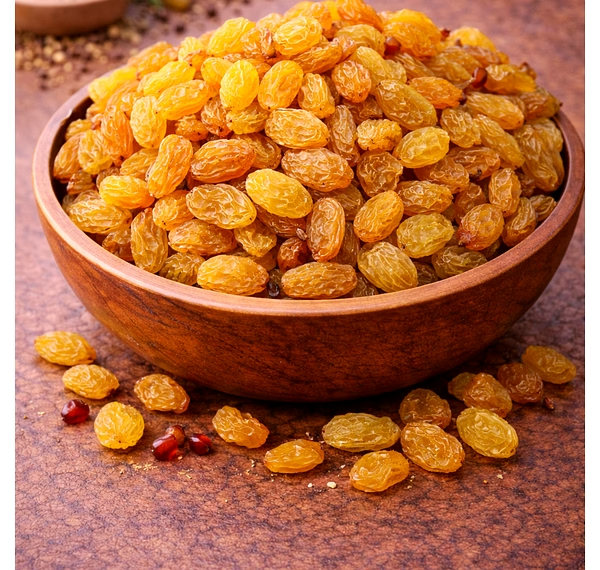
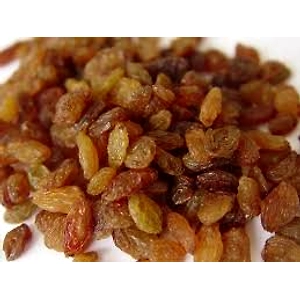
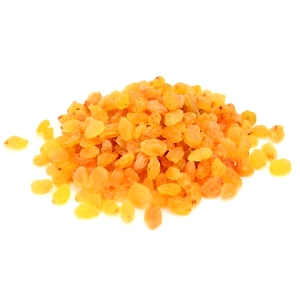
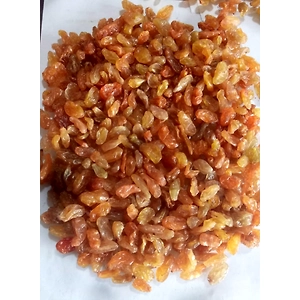
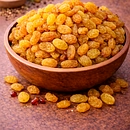
Yellow Raisins are seedless sun-dried grapes processed to retain pale golden hue through controlled sulfur treatment and low-temperature dehydration. Typical commercial lots present uniform berry size, translucent amber color and moisture regulated to industry-standard ranges to preserve texture and inhibit microbial activity; optical sorting and lot-based grading ensure batch uniformity for foodservice and retail formulation.
Supplied for large-volume orders with full export documentation and traceable lot coding, packaging is configured for maritime and multimodal transport—commonly 25–50 kg woven sacks with inner vapor-barrier liners and palletized loads for cold-chain compatibility. Certificates provided include IEC registration and phytosanitary clearance to support Dry Fruits Bulk Suppliers channels and international shipment requirements to target markets.
Contact us for
Yellow Raisins originate from selected grape cultivars processed by blanching, controlled sulfur exposure and dehydration. Sulfur dioxide is applied in regulated doses during processing to inhibit enzymatic browning; residual SO2 is monitored by lot and adjusted to comply with importing-country limits. Sorting uses a combination of mechanical graders and optical sorters to remove discolored or foreign-material particles, while humidity-controlled drying tunnels target consistent moisture profiles that influence texture and microbial stability. Traceability is maintained through lot-based coding linked to harvest date, processing line and certificate set.
When incorporated into food manufacturing, these raisins exhibit predictable rehydration kinetics and stable color under typical mixing and baking temperatures. Consistent size distribution reduces segregation during automated dosing, improving throughput on depositor lines and reducing reject rates. Packaging formats are selected to mitigate moisture migration and anaerobic conditions during sea freight; inner vapor barriers and desiccant options are available for long transit times. Cold-chain staging prior to container stuffing is recommended for markets with high ambient temperatures to preserve texture.
Primary use cases include inclusion in bakery lines, cereal and trail-mix formulations, and confectionery blending. Supply formats support retail repacking and private-label processing as well as bulk distribution to food processors. Order fulfillment aligns with Dry Fruits Bulk Suppliers channels and can be adapted to meet importers' documentation requirements, including phytosanitary certificates, IEC registration and lot-level lab testing upon request.
| Established in: | 2020 |
| Bussiness Type: | Sole Proprietorship |
| Bussiness Type: | Manufacturer, Merchant |
| MSME: | Yes |
| Export Turnover (3 years): | Less than US$10,000 |
| Countries would like to export to: | Australia, Canada, France, Kenya, Russia, Sri Lanka, United Arab Emirates, United States |
| No of employees: | 1-10 |