My Account
-
Buyer
Register as a Foriegn Buyer
-
Seller
Log In Register as a Seller
My Account
Buyer
Seller
Min Order Qty 1
Product not available
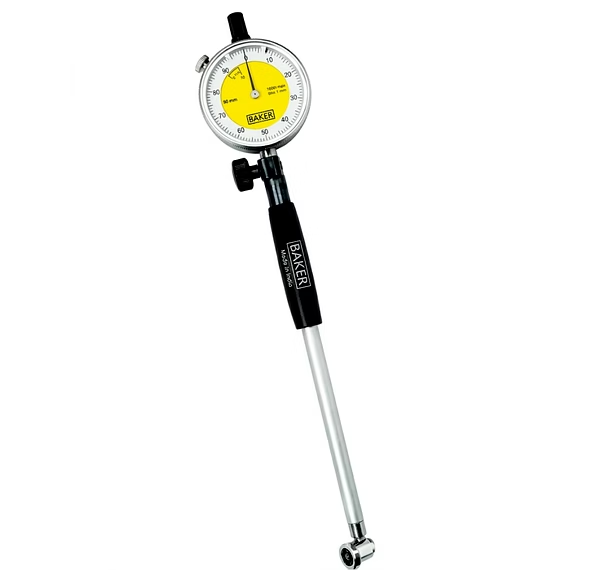
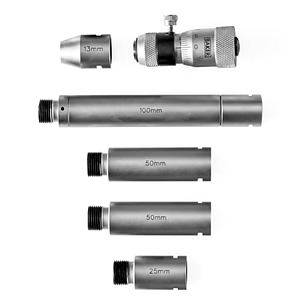
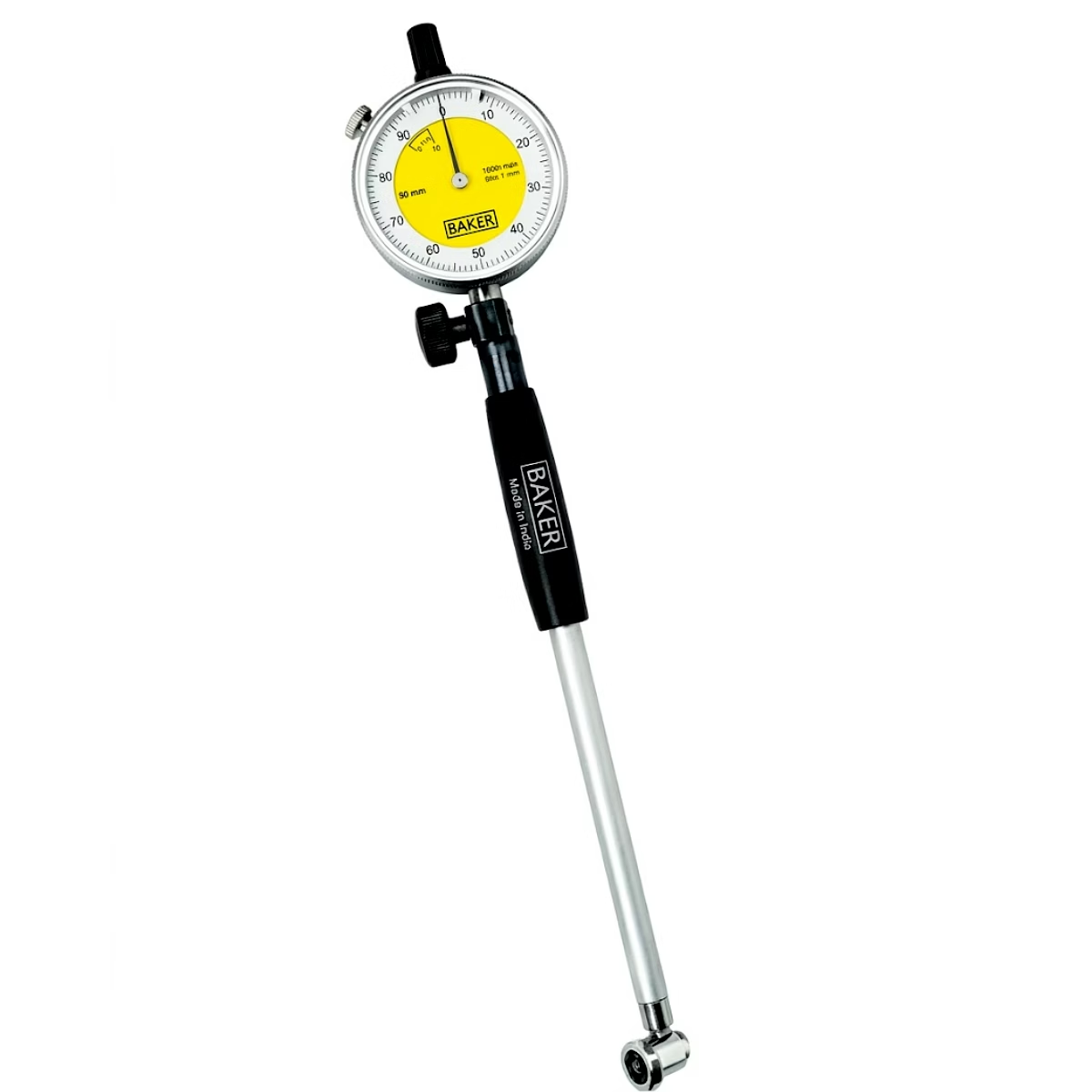
The Bore Gauge is a measuring instrument for internal diameters, useful for checking bores, cylinders and reamed holes. It is designed for machinists, QC engineers and maintenance technicians performing in-line or bench inspection.
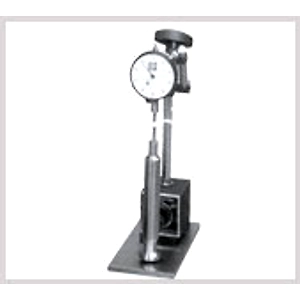
Measurement systems are validated using ring gauges and master sets, with calibration certificates recorded in a CMM lab. Proper use and storage maintain accuracy.
Contact us for
Bore gauges use a three-point or expanding-contact head to translate internal diameters to a dial or digital readout. Typical resolution is 0.01 mm with model variations offering finer sensitivity for precision bores. For best results, center the head and rock the gauge slightly to find the minimum reading point.
Calibration against ring gauges and internal master sets provides traceable accuracy. A calibration certificate from the CMM lab should accompany instruments used for contract inspection or supplier acceptance.
Ensure the bore is clean and free of chips. For deep bores, use extension rods and confirm concentric seating. Use temperature-controlled conditions when small tolerances are critical to avoid thermal expansion errors.
| Established in: | 1992 |
| Bussiness Type: | Private Limited |
| Bussiness Type: | Merchant |
| MSME: | Yes |
| Export Turnover (3 years): | US$10,000 to US$50,000 |
| Countries would like to export to: | Australia, Bangladesh, Bhutan, Israel, Malaysia, Nepal, Oman, Saudi Arabia, United Arab Emirates, Vietnam |
| No of employees: | 31-50 |