My Account
-
Buyer
Register as a Foriegn Buyer
-
Seller
Log In Register as a Seller
My Account
Buyer
Seller
Min Order Qty 1 Piece
Product not available
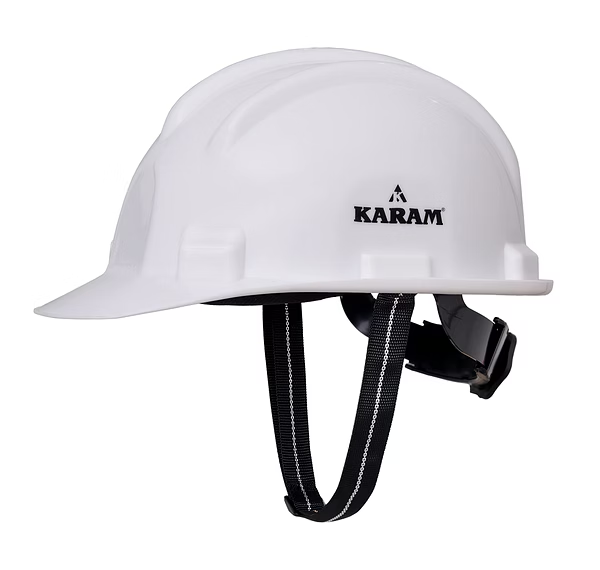
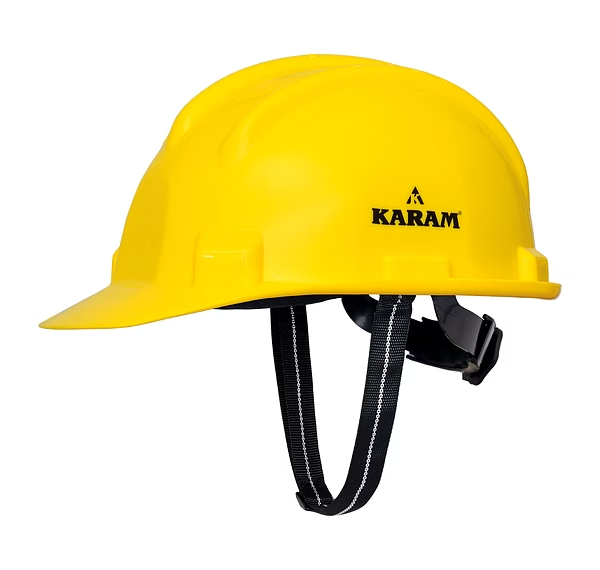
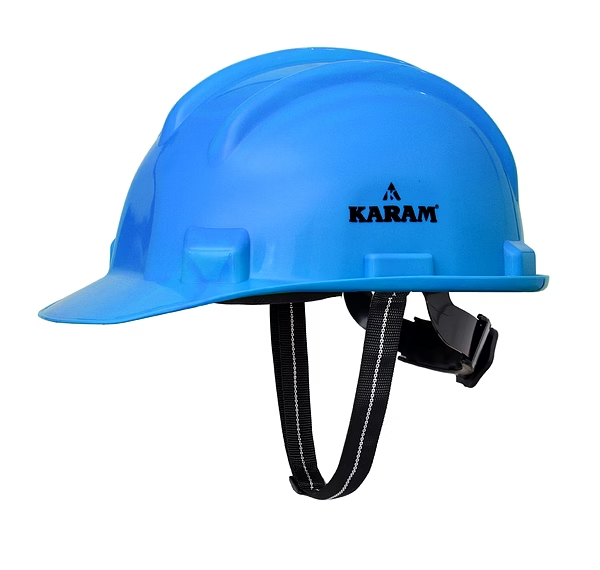
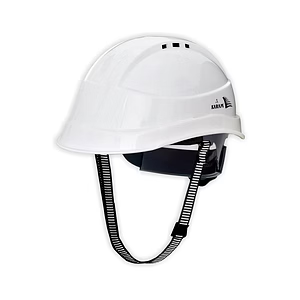
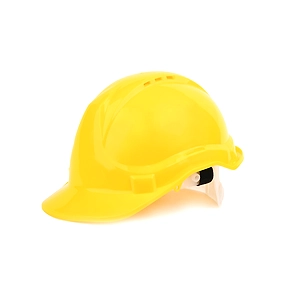
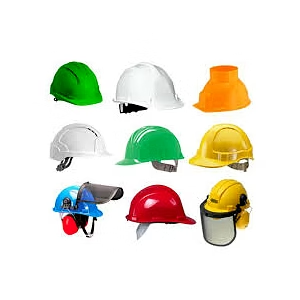
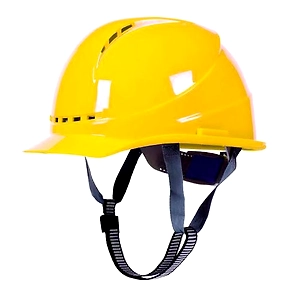
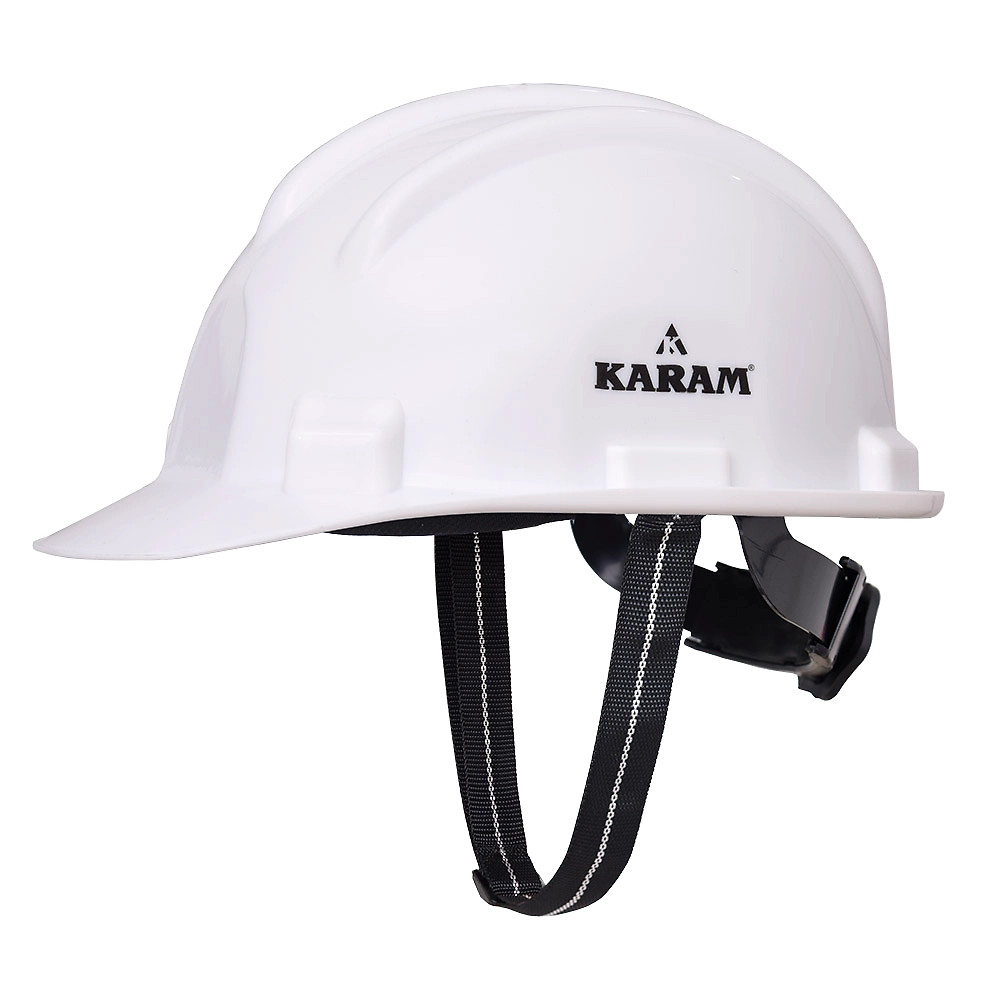
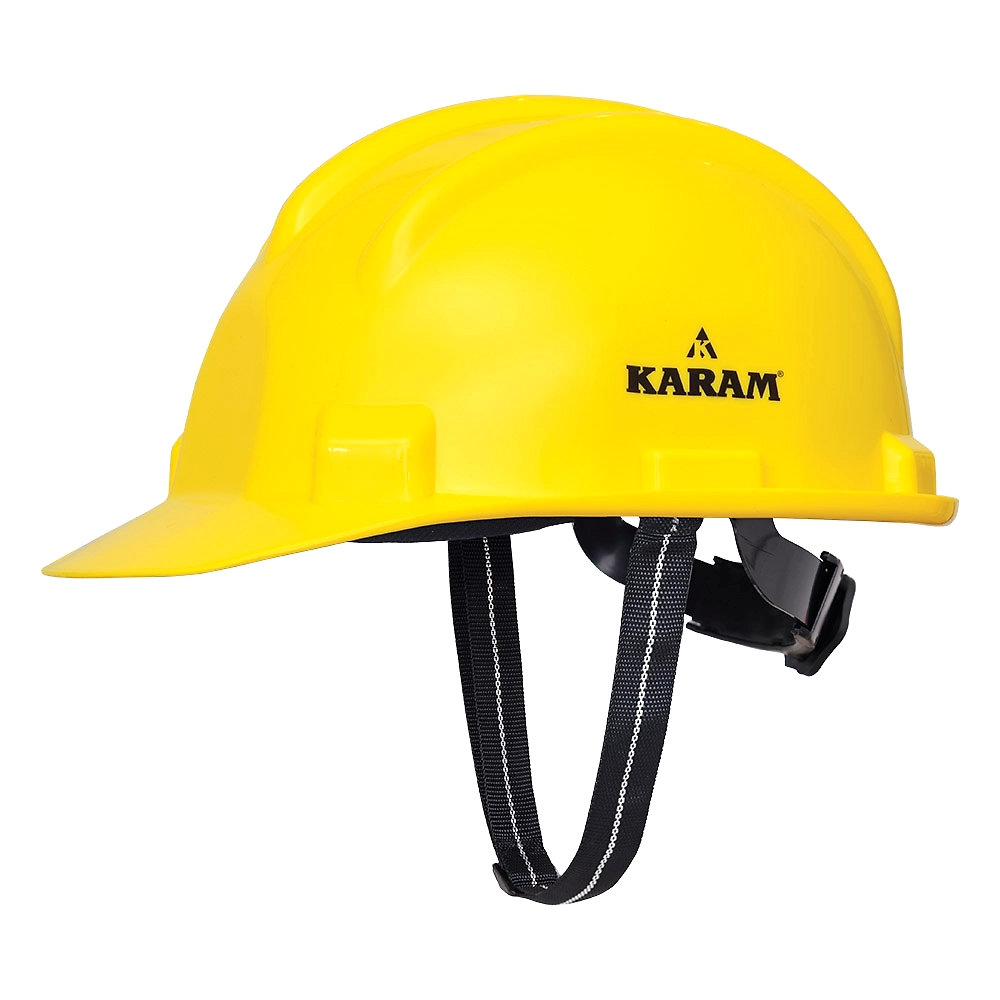
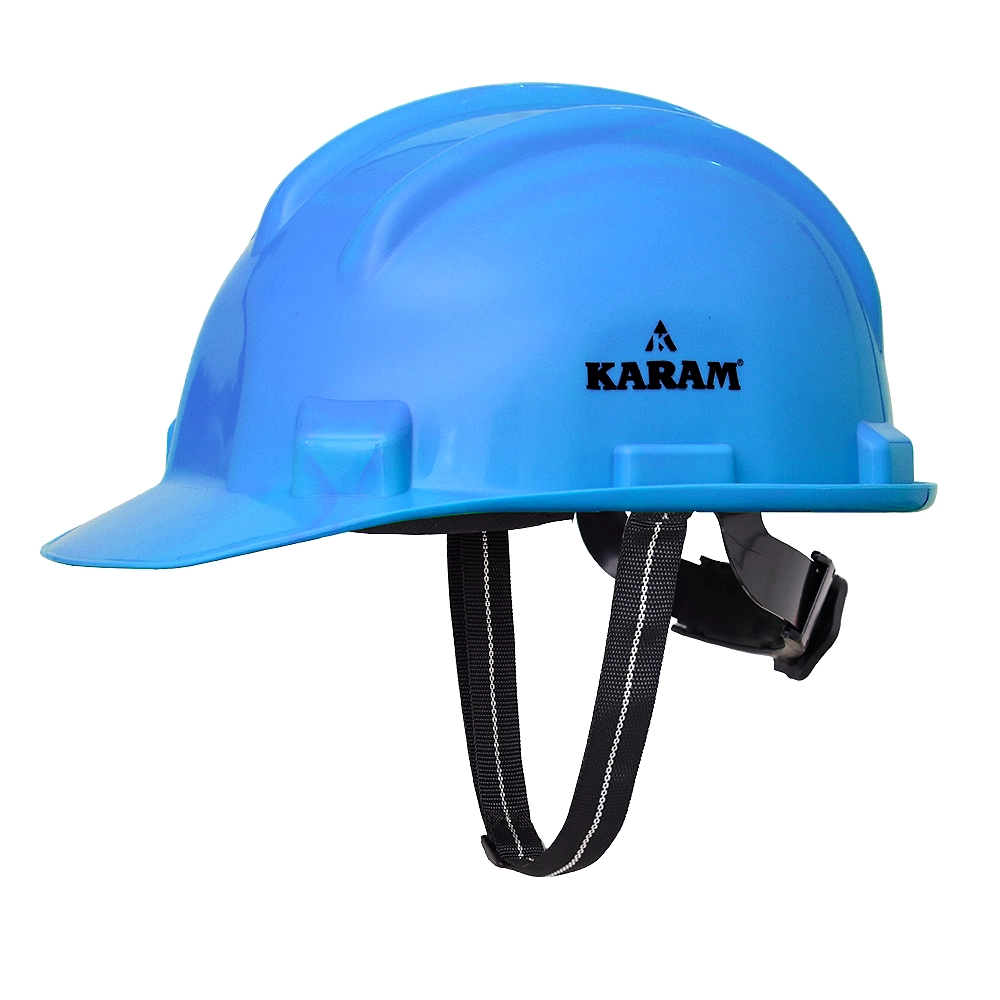
OSHA regulates head protection for general industry, construction, and maritime and requires employers to ensure affected workers wear appropriate head protection. This Safety and Health Information Bullet in (SHIB) provides information for employers and employees when selecting PPE for head protection. This SHIB also provides instructions for properly inspecting and storing head protection. With a thorough understanding of the benefits and capabilities of head protect ion options, employers and workers can make informed decisions on selection and use. Proper head protection is crucial in work environments with falling objects, struck-by, overhead electrical hazards, and risks from slips, trips, and falls. Both scientific understanding of head injuries and head protection technology continues to advance.
Contact us for
Choosing the right head protection Employers must conduct a hazard assessment at their job site and based on the workplace hazards determine whether head protect ion is necessary and if so, the most appropriate type. Safety Helmets for OSHA After a general Job Hazard Analysis of its work and a thorough evaluation of head protect ion options, OSHA determined Type II, Class G safety helmets were the most appropriate form of head protection for its employees. The Agency recognizes that based on their own Job Hazard Analysis, employers and workers may decide that another form of head protection is for them. Considerations when selecting head protection. Construction Sites. For construction sites, especially those with high risks of falling objects and debris, impacts from equipment, awkward working positions, and/or slip, trip, and fall hazards: consider Type II head protection with chin straps. Oil and Gas Industry. For oil and gas industry worksites where workers face multiple hazards, including potential exposure to chemicals and severe impacts: consider Type II head protection with integrated eye and face protection, like face shields and googles. Working from Heights. For tasks or jobs that involve working from heights: consider head protection with chin straps to prevent the head protection from falling off. Electrical Work. For tasks involving electrical work or proximity to electrical hazards, head protection with nonconductive materials (Class G and Class E) provide protection to prevent electrical shocks. NOTE – Vented hard hats or safety helmets cannot be used for electrical work.
| Established in: | 2022 |
| Bussiness Type: | Sole Proprietorship |
| Bussiness Type: | Merchant |
| MSME: | Yes |
| Countries exporting to: | Australia, Bhutan, Canada, France, Georgia, Germany, Ghana, Hungary, Iceland, Indonesia, Israel, Italy, Japan, Kazakhstan, Korea South, Kuwait, Malaysia, Myanmar, Nepal, Netherlands The, New Zealand, Oman, Philippines, Poland, Portugal, Puerto Rico, Qatar, Russia, South Africa, Sri Lanka, Switzerland, Taiwan, Thailand, Turkey, United Arab Emirates, United Kingdom, United States, Venezuela, Vietnam |
| Export Turnover (3 years): | Less than US$10,000 |
| Certifications: | ISO |
| Countries would like to export to: | Japan, Malaysia, Myanmar, Nepal, New Zealand, Oman, Philippines, Qatar, Russia, South Africa, Sri Lanka, Turkey, United Arab Emirates, United Kingdom, United States |
| No of employees: | 1-10 |